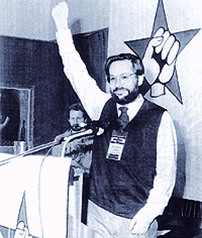
Click on link to open below story; click on picture below to enlarge for readable size!

FOR A FASCINATING VIDEO VIEW OF JAVIER SOLANA ON A GERMAN AND ENGLISH LANGUAGE INTERVIEW, Click here. HE IS DISCUSSING RECEIVING HIS CHARLEMAGNE PRIZE (karlspreis)
The European Union Deal
July 25, 2007
by Constance Cumbey
A NewsWithViews.com article
edited and revised 7-26-2007 for my blogspot readers
On a random internet search, looking frankly for something else I never found, I just discovered an off the road lovely little blogspot maintained by one of Javier Solana’s most obvious London based thinktanks: The Centre for European Reform. A few years ago, Herb Peters and I laughed on live radio air at a $10,000 award two of its foremost analysts, Charles Grant and Steve Everts received from the prestigious New York City based Foreign Policy Association for winning an essay competition for ideas on how to better manage “Transatlantic Relations” in its alleged “growing divide.” Their prize-winning thoughts:
- Give Javier Solana more power;
- Give Javier Solana more money;
- Give Javier Solana more staff.
We joked on the air over WMUZ radio in Detroit on my then regular program, “Law Talk,” “Now why didn’t we think of that? We could have had $10,000 to divide by writing the obviously desired lines of other power elites: “Give Javier Solana more power, more money, and more staff.”
Grant/Everts’ exact essay wording was “Streamline decision-making and give Javier Solana more resources.” Quoting from their prize winning essay:
By all accounts, Solana has been a great success. He has put the EU on the map,
in the Balkans, the Middle East and elsewhere. The time has come to give him a
formal right of initiative. Doing so would put him at the same level as the
Commission and the member-states. It is clear that EU foreign policy would be
more impressive if all sides worked better together – and if the EU could take
decisions more easily. One way to achieve both these objectives would be to
promote more joint initiatives. The EU should decide that if the High
Representative and the Commissioner for external relations agreed on a joint
proposal, then EU foreign ministers should accept it if a qualified majority
voted in favor. Because Solana has such excellent links with the capitals, he
would filter out any idea that he knew was too controversial. Similarly,
involving the Commission at an early stage in the policy process can ensure that
its extensive resources are used to support the EU’s diplomatic strategy. . . .
In any case, Solana needs more resources. The EU needs to triple the CFSP budget
– to the still modest sum of €120 million. EU leaders routinely say they want
Europe to assert itself more strongly on the global stage. But then they balk at
the financial consequences. Clearly, the EU cannot develop a credible foreign
policy ‘on the cheap’. Solana also needs more people working for him. In the
short term this means stationing more national diplomats in Brussels. In the
medium term, the EU should create its own diplomatic service. EU diplomats
should shuttle between the Brussels,the capitals and the Commission delegations
outside the EU. They should gradually take the lead in blending national
perspectives on international problems. Developing shared analyses is the best
way to ensure that member-states also agree on the necessary policy responses.”
Co-author Steven Everts thereafter not surprisingly left the CER to take a position on Javier Solana’s cabinet. Charles Grant stayed behind, also to the benefit of Javier Solana. The CER ideas were instrumental in shaping notions that would be incorporated in shaping Javier Solana’s to be all powerful Foreign Minister post in the failed European Constitutional drive.
Now his compatriot Charles Grant and company are working hard to shame Great Britain into accepting the deals made on the new “Treaty” cum constitution in drag. This is what Grant says are the main features of “the Treaty”:
· A semi-permanent president of the Council will replace the 6-monthly rotating presidency. The various formations of the Council of Ministers will still be chaired by the rotating presidency.
· The exception is the Council of Foreign Ministers, which will be chaired by the new High Representative for EU Foreign and Security Policy (this post is a merger of those held by the current High Representative, Javier Solana, and the
commissioner for external relations, Benita Ferrero-Waldner).
· A new double-majority voting system for the Council of Ministers, under which a decision is passed when it is backed by 55% of the members-states, so long as these represent 65% of the EU’s population.
· The powers of both national parliaments and the European Parliament in EU law-making will be strengthened.
· From 2014 onwards, the Commission will only have 18 members (the seats will rotate among the 28 EU member-states, with Croatia likely to join before 2014).
When there was obviously popular rejection by the peoples of the affected countries themselves to this acknowledged “democratic deficit” power grab, new scheming began. That culminated in the recent treaty meetings and there seems to be an obvious “the people be damned” approach to it. British elements are trying frantically to force a referendum. Eurocrats and global elitists are frantically trying to stop one from happening.
Obviously, what is being framed here is much larger than simply Europe. Why else would a USA based group hand $10,000 for a simply worded essay that suggests handing one man, Javier Solana, such unilateral power and control?
In my 26 years of researching the New Age Movement and 12 years of researching Dr. Javier Solana and his roles in Middle East processes, NATO, the European Union, and now “global governance,” I have learned that those advocating all of the above play a lovely little game of “now you see us, now you don’t.”
Charles Grant, the obvious Javier Solana partisan who stayed behind at the CER think tank while his writing partner, Steve Everts went on to be a part of Dr. Solana’s EU cabinet emphatically insists that Britain does not need a referendum. [1]
Impugning noble intent to this Brussels power grab, Charles Grant prefaces the report by saying:
Thank goodness for the agreement in Brussels last night. Without a deal, the EU
would have been mired in arguments on treaties, institutions and process for a
prolonged period. Now, hopefully, the Union can move on to deal with real
problems in the real world, such as climate change, energy security, Kosovo, the
revival of Russian power, and so on.
The English based CER has plenty of praises for Germany’s Angela Merkel and her Foreign Minister, Frank-Walter Steinmeier for expediting the process. At the same time, they appear unduly anxious to hand inordinate powers to one man in what appears to be one of the greatest “trust me” games in history.
My mother told me never to trust somebody who says “trust me.” I would never say never, but I would definitely say that when one is very anxious that you forego a referendum, I would personally double my caution.
What are the terms of this “treaty” that the CER is so anxious for the British to uncritically accept, sans referendum? Why are some on the USA side of the “Atlantic pond” so anxious to hand one man in charge so much power, money, and staff?
Fortunately, some of our British cousins appear to be waking up. According to EU Referendum, a spot I permanently link to from my personal blogspot, at least one member of the House of Lords has called a spade a spade:
“. . . the new trade minister Digby, Lord Jones, who says, ‘this is a con to
call this a treaty - it's not. It's exactly the same - it's a constitution.’"
Of course, the CER has attempted, as is usually the practice when one observes New World Order items in implementation before pronouncing them “a done deal” to characterize the objectors as humorless. An article on their blogspot alluded to just that, “of mice, men, and European Reform” by Hugo Brady. Much more fascinating were the critical comments more discerning readers placed under the pro-Treaty blog:
- Anonymous said...
Do you regard the new version of the constitution as being radically different to the original? If so why are all of the following wrong? - Germany “The substance of the constitution is preserved. That is a
fact.” (Angela Merkel, German Chancellor, Telegraph, 29 June 2007) - Ireland “90 per cent of it is still there... these changes haven't made any dramatic
change to the substance of what was agreed back in 2004.” (Bertie Ahern, Irish
Taoiseach, Irish Independent, 24 June 2007) - Czech Republic “Only cosmetic changes have been made and the basic document remains the same.” (Vaclav Klaus, Czech President, Guardian, 13 June 2007)
- Spain “A great part of the content of the European Constitution is captured in the new treaties.” (Jose Zapatero, Spanish PM, El Pais 23 June 2007)
- Finland “There’s nothing from the original institutional package that has been changed.” (Astrid Thors, Finnish Europe Minister, TV-Nytt, 23 June 2007)
- Denmark “The good thing is...that all the symbolic elements are gone, and that which really matters – the core – is left.” (Anders Fogh Rasmussen, Danish PM, Jyllands-Posten, 25 June 2007)
- Austria “The original Treaty for a Constitution was maintained in substance.” (Austrian government website, 25 June 2007)
- Belgium The new treaty “takes up the most important elements of the constitutional treaty project.” (Guy Verhofstadt, Belgian PM, Agence Europe, 24 June 2007)
- Italy “As for our conditions… I outlined four red lines with respect to the text of the Constitution: to keep a permanent president of the EU, to keep the single overseer for foreign policy and a common diplomatic service, to keep the extension of majority voting, to keep the single legal personality of the Union. All of this has stayed.” (Romano Prodi, Italian PM, La Repubblica, 24 June 2007)
- Lithuania Lithuania has “100 percent fulfilled the tasks set forth before the meeting, including the primary objective of preserving the substance of the Constitutional Treaty.” (Office of the President of Lithuania, official press release)
Luxembourg “The substance has been preserved from Luxembourg’s point of view.” (Jean-Claude Juncker, Luxembourg PM, Agence Europe, 24 June)
Slovenia With the new treaty, the EU gets “content that is not essentially different from the constitutional treaty… All key institutional solutions remain… Some symbolic elements will be cleared up and some formulations toned down.” (Janez Jansa, Slovenian PM, 23 June 2007, Slovenian Government Communication Office) - The European Commission “It’s essentially the same proposal as the old
Constitution.” (Margot Wallstrom, EU Commissioner, Svenska Dagbladet, 26 June
2007) - The author of the EU Constitution “This text is, in fact, a rerun of a
great part of the substance of the Constitutional Treaty.” (Valery Giscard
d’Estaing, Telegraph, 27 June 2007) - European Parliament The European
Parliament “welcomes the fact that the mandate safeguards the substance of the
Constitutional treaty.” (European Parliament resolution, 10 July 2007)
Well, as a famous wit once said, “A rose by any other name is still a rose.” And I might add that “a skunk by any other name is still a skunk.” And tyranny by any other polite moniker such as “democratic deficit” is still tyranny.
I don’t want to tell my British cousins what to do, but if I were them, I would stick to my guns and demand that referendum. They have nothing to lose but their national identities and their freedoms! And ditto here in the USA where we have the not so subtle pushes for “global governance,” also under the “benevolent” guidance of Dr. Solana aided by the Brookings Institution, Stanford University, New York University, and with the apparent blessings of even our USA State Department.
I often tell my law practice clients, “there are two things one should never rush into: one is marriage and the other is divorce.” I think on a national and global scale, we should be very cautious about rushing into a union we may well live to regret. If the prophesied revelations are true, and given the present objective evidence, I cannot help but believe they are, truly union with this global governance scheme will be ultimately and tragically regretted by many.
May the Lord help us all and may the Lord now especially give wisdom and discernment especially to the more immediately affected Europeans as they face this ultimate insult to their long held identities, all presumably in the name of “peace and safety.”
Footnotes:
1, "We do not need a referendum: The new treaty agreed by EU members last night does not change the way Britain is governed or transfer significant powers to Europe" by Charles Grant, Published in the Guardian blog, 23 June 2007 Article by Steven Grant,
© 2007 - Constance Cumbey - All Rights Reserved
Sign Up For Free E-Mail Alerts
E-Mails are used strictly for NWVs alerts, not for sale
E-mail: cumbey@yahoo.com
Blog Spot: http://www.cumbey.blogspot.com/
Home